


Table of Contents
Self-diagnosing joint pain is difficult because both gout and pseudo gout can cause sudden onset joint pain, joint swelling, inflammation, and stiffness that feel nearly identical during acute attacks. These painful forms of inflammatory arthritis often appear overnight, affect one or more joints, and may involve severe pain and swelling that limits movement.
When symptoms overlap, identifying the affected joint becomes one of the most reliable early clues. Gout most commonly affects the big toe, while pseudogout most commonly affects the knee.
This article explains how pain location helps distinguish pseudogout from gout, supports recognition of pseudogout symptoms, clarifies pseudogout diagnosis, and outlines clinical decision points used to reduce flare frequency and help protect long-term joint function.
Quick Guide
Gout vs. Pseudogout: How Pain Location Helps Tell Them Apart
| Feature | Gout | Pseudogout |
|---|---|---|
| Most Common Joint | Big toe (cooler peripheral joint) | Knee, then wrist, shoulder, ankle |
| Cause | Uric acid crystals, often with high uric acid levels | Calcium pyrophosphate crystals (CPPD) |
| Pain Type | Sharp, burning, intense surface sensitivity | Deep aching, stiffness, pressure |
| Swelling & Redness | Marked redness, heat, severe swelling | Significant swelling, milder redness |
| Common Triggers | Alcohol, dehydration, high-purine meals, some diuretics | Joint trauma, surgery, excess iron, parathyroid or mineral imbalances |
| Crystal Shape (Fluid Test) | Needle-shaped uric acid crystals | Rhomboid-shaped calcium pyrophosphate crystals |
| X-Ray Clue | Often not visible early (crystals microscopic) | Chondrocalcinosis (white lines in cartilage) |
SUPPORT THE URIC ACID SIDE OF YOUR ROUTINE
Trying to understand gout versus pseudogout? For uric-acid-focused wellness, add Alerna Uric Acid Support to your daily routine.
Explore Uric Acid Support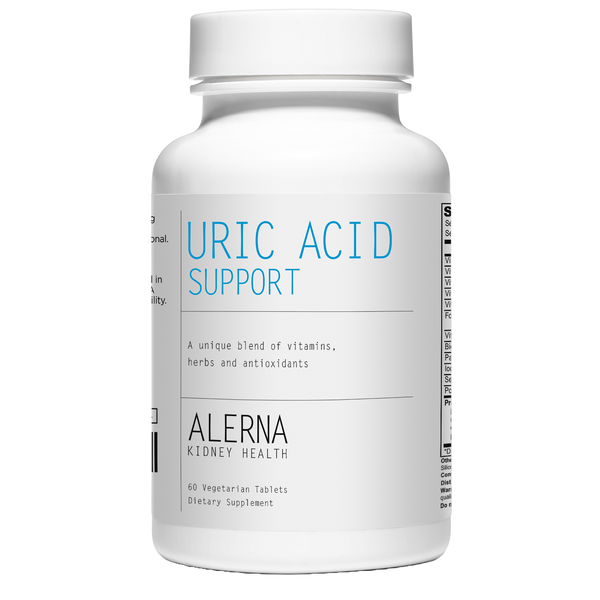
Why Does Pain Location Differ Between the Two Conditions?
Pain location differs because gout and pseudo-gout are types of arthritis caused by different crystal deposits that form in different joint environments. Gout is a form of inflammatory arthritis driven by uric acid crystal formation, often associated with elevated uric acid levels. Pseudogout is caused by calcium pyrophosphate deposition disease, also known as calcium pyrophosphate deposition (CPPD).
Temperature, joint cartilage structure, mineral imbalances, and joint fluid chemistry influence where crystals deposit, explaining why each condition commonly affects different joints.
Preference for Cooler Peripheral Joints in Gout
Gout flares occur more often in cooler peripheral joints because uric acid crystals form more readily at lower temperatures. The big toe is the most commonly affected joint in early gout, partly because it is a peripheral joint exposed to cooling and frequent mechanical stress during walking and standing.
When too much uric acid circulates in the body, uric acid crystals form in the joint space, causing sudden, intense pain, inflammation, and severe flares. Early gout flares often involve only one joint, making the big toe a classic site of acute episodes.
Accumulation in Large Hyaline Cartilage in Pseudogout
Pseudo gout develops when calcium pyrophosphate crystals accumulate within thick joint cartilage of large, weight-bearing joints. This process, known as calcium pyrophosphate deposition, leads to CPP crystal formation in the joint cartilage and synovial fluid. The knee is the most commonly affected joint, followed by the wrist, shoulder, ankle, and other joints.
Repeated attacks of acute pseudogout can contribute to ongoing joint inflammation and may be associated with progressive joint changes over time, especially when flares recur or underlying contributors are not addressed.

Comparing Symptoms in the Knees vs. Toes
Comparing knee versus toe symptoms helps distinguish pseudogout from gout: although both are forms of inflammatory arthritis, the pattern of joint pain, inflammation, and recurrence differs. Both arthritic conditions share similar symptoms, such as pain and swelling, but the affected joint, pain intensity, flare frequency, and whether several joints are involved provide important clues for pseudogout diagnosis.
Intense Sensitivity and Redness in the Big Toe
Gout commonly affects the big toe and causes intense pain, severe flares, redness, heat, and marked joint inflammation. Even minimal contact can trigger sharp discomfort and can be among the most painful presentations of inflammatory arthritis. These gout flares often have a sudden onset, involve only one joint during early acute episodes, and produce burning pain and swelling driven by excess uric acid and crystal deposits within the joint space.
During acute attacks, symptoms may escalate rapidly, disrupt sleep, and limit walking, often prompting medical evaluation to assess risk factors, uric acid levels, and to determine an appropriate diagnosis and treatment strategy.
Stiffness, Aching, and Swelling in the Knee
Pseudogout commonly affects the knee and presents with aching joint pain, stiffness, and significant joint swelling rather than sharp surface sensitivity. Excess joint fluid builds up within the joint space, limiting movement and causing pressure and warmth. Redness is usually milder than gout, but inflammation may persist during acute pseudogout, repeated attacks, or severe flares.
Treating pseudogout focuses on symptom relief, reducing inflammation, and supporting joint function in the most commonly affected joint. Management may include monitoring joint cartilage changes, addressing mineral imbalances when present, and using strategies that may reduce flare frequency and mobility loss over time.
KNOW THE DIFFERENCE, BUILD THE RIGHT ROUTINE
When uric acid is your focus, hydration and mindful habits matter. Complement them with Alerna Uric Acid Support.
See Uric Acid SupportHow Triggers Vary Based on Joint Location
Triggers vary by joint location because different conditions affect different tissues. Events leading up to acute attacks often clarify the diagnosis.
Dietary triggers for gout: Drinking alcohol, dehydration, and high-purine meals can raise uric acid levels and trigger gout flares in the big toe.
Physical stressors for pseudogout: Pseudogout attacks are more often linked to joint trauma, surgery, excess iron, parathyroid gland disorders, or mineral imbalances rather than diet.
Medication effects: Diuretics can increase gout risk in some patients, while pseudogout is typically more connected to CPP crystal formation and cartilage stress. Preventive strategies may reduce flare frequency in patients with frequent attacks.

Diagnostic Tools for Confirming the Source of Pain
Pain location suggests a cause, but testing confirms the diagnosis. Doctors review medical history, assess symptoms, and examine joints. To diagnose pseudogout with confidence, clinicians often use joint aspiration and synovial fluid analysis to detect calcium pyrophosphate crystals. Blood tests identify excess iron, mineral imbalances, or endocrine disorders. Imaging tests support diagnosis and treatment planning and help distinguish pseudo gout from gout and rheumatoid arthritis.
Visibility of Chondrocalcinosis on X-Rays
Imaging tests play an important role when pseudogout is suspected, particularly in identifying calcium pyrophosphate deposition within the joints. In pseudo gout, X-rays often show chondrocalcinosis, which appears as thin white lines or streaks within the joint cartilage and joint space. These crystal deposits are most commonly visible in the knee, the most commonly affected joint, but may also appear in other joints such as the wrist or shoulder.
Chondrocalcinosis is associated with CPPD and supports pseudogout diagnosis. In contrast, early gout flares may not be visible on imaging tests because uric acid crystals are microscopic during acute episodes, making X-rays less reliable for early gout detection.
Identification of Crystal Shape in Fluid Analysis
Joint aspiration with synovial fluid analysis is a standard confirmatory test for diagnosing pseudogout and distinguishing it from gout and other inflammatory arthritic conditions. During this procedure, joint fluid is removed from the affected joint and examined under polarized light microscopy. Needle-shaped uric acid crystals confirm gout, while rhomboid-shaped calcium pyrophosphate dihydrate crystals confirm pseudo gout caused by CPP crystal formation.
Identifying crystal morphology enables accurate diagnosis of pseudogout, guides diagnosis and treatment decisions, helps assess severity during acute attacks, rules out joint infection, and informs strategies for treating pseudogout and preventing recurrent attacks and long-term joint damage.
MAKE URIC ACID AWARENESS A DAILY HABIT
Keep hydration, mindful eating, and consistent habits working together. Add Alerna Uric Acid Support to your routine.
Start Your RoutineSupporting Joint Health Over the Long Term
Because gout and pseudogout come from different crystals, they call for different long-term care, and only a doctor can confirm which one you have. For gout specifically, where high uric acid is the driver, everyday habits like steady hydration, a lower-purine diet, and your doctor's guidance on any prescribed medication do most of the work.
If you're managing the gout side and want a supplement as one part of that routine, Alerna's Uric Acid Support - 60 Vegetarian Tablets is made to complement those habits. It supports a uric-acid-focused routine only; it does not treat pseudogout, which involves calcium crystals rather than uric acid, and it is not a replacement for prescribed treatment. Talk with your doctor about which condition you have before starting anything new.
Frequently Asked Questions
Can you have gout and pseudogout at the same time?
Yes. Uric acid crystals and calcium pyrophosphate crystals can coexist in one or more joints, complicating diagnosis and often requiring joint aspiration, synovial fluid analysis, imaging, and careful review of the medical history.
Does pseudogout ever affect the big toe?
Pseudo gout can affect the big toe, but it is uncommon. The knee remains the most commonly affected joint, followed by other large joints, and crystal analysis is required to confirm the diagnosis.
Is pseudogout more painful than gout?
Both conditions cause intense pain. Gout often causes sharp pain in the big toe, while pseudogout produces deep, aching pain and swelling in larger joints during acute episodes.
What foods trigger pseudogout compared to gout?
Gout is triggered by high-purine foods, alcohol, and dehydration, while pseudo gout is linked to mineral imbalances, excess iron, joint trauma, and parathyroid gland disorders rather than diet.
How long does a pseudogout flare in the knee last?
A pseudogout flare often lasts several days to a few weeks, depending on severity, treatment response, repeated attacks, and underlying joint changes.
Medical Disclaimer:
The information provided in this article is for educational and informational purposes only and should not be considered a substitute for professional medical advice, diagnosis, or treatment. Please consult with your healthcare provider before starting any new dietary supplement, especially if you are pregnant, nursing, have a medical condition, or are taking other medications. Never disregard professional medical advice or delay in seeking it because of something you have read in this article.
References
Azam, A., Minalyan, A., & Naik, R. (2025). Calcium pyrophosphate deposition disease. In StatPearls [Internet]. StatPearls Publishing. https://www.ncbi.nlm.nih.gov/books/NBK540151/
Harvard Health Publishing. (n.d.-a). All about gout. Harvard Medical School. https://www.health.harvard.edu/diseases-and-conditions/all-about-gout
Harvard Health Publishing. (n.d.-b). Pseudogout (CPPD): A to Z. Harvard Medical School. https://www.health.harvard.edu/diseases-and-conditions/pseudogout-cppd-a-to-z
Harvard Health Publishing. (n.d.-c). Pseudogout (CPPD): A to Z. Harvard Medical School. https://www.health.harvard.edu/diseases-and-conditions/pseudogout-cppd-a-to-z
MedlinePlus. (n.d.). Gout. U.S. National Library of Medicine. https://medlineplus.gov/gout.html
Nallamshetty, L., & Singh, J. A. (2024). Inflammatory arthritis. In StatPearls [Internet]. StatPearls Publishing. https://www.ncbi.nlm.nih.gov/books/NBK507704/


