


Table of Contents
QUICK ANSWER
Less pain after eating cherries doesn't mean your uric acid is lower. Gout pain comes from inflammation, and most untreated flares settle within 3 to 14 days, so relief often comes on its own. In trials of people with gout, tart cherry concentrate and juice didn't change uric acid levels. A blood test is the only way to know your number.
The flare eases, the cherry bowl sits empty, and the connection feels obvious. It's also one of the easiest mistakes to make with gout, and it keeps the gout cherries myth alive.
Less pain after eating cherries doesn't mean your uric acid is lower. Gout flares often fade without treatment within 3 to 14 days, and pain follows inflammation, not your uric acid number. Only a blood test shows uric acid levels. At Alerna Kidney Health, we think the most useful number in gout care is the one on your lab report.
TART CHERRY, MINUS THE MYTH
Felt better after a bowl of cherries? Your lab report, not your pain level, tells you your uric acid number. But if you still love tart cherry, enjoy it for what it is. Alerna's Tart Cherry offers tart cherry extract in a vegetarian capsule for plant-based antioxidant support. It's one honest part of a proactive, long-term wellness routine.
See Our Tart Cherry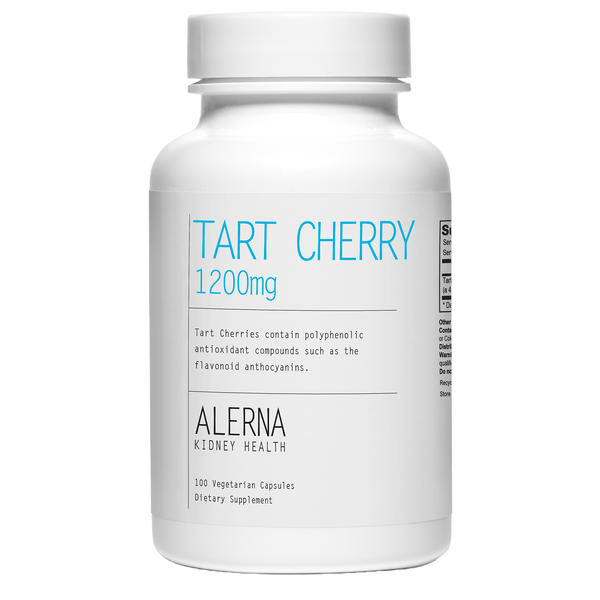
Where Did the Gout Cherries Myth Start?
The cherry idea didn't come from nowhere. It grew from real studies and very real personal experience.
Real Research, Stretched Too Far
A 2012 study led by researchers at Boston University followed 633 people with gout and linked eating cherries to fewer gout attacks. The study tracked when flares happened, not whether cherries changed uric acid in the blood. In many online retellings, "fewer attacks" turned into "lower uric acid."
Relief That Feels Like Proof
When pain fades after a bowl of cherries, crediting the cherries feels natural. People with gout often tie flares to specific foods, in both directions. In a 2015 New Zealand survey, about 1 in 5 people with gout named tomatoes as a trigger, even though tomatoes are low in purines. Personal patterns are worth noticing, but timing explains much of it.

Why Do Gout Attacks Fade?
A gout attack follows a pattern, and knowing that pattern changes how any cherry "result" looks. Gout, also called gouty arthritis, flares hard and then settles, often with nothing else changed at all.
Flares That Settle without Help
Pain usually peaks within 12 to 24 hours, often in the big toe, with heat, redness, and swelling. For most people, an untreated first attack settles in 3 to 14 days. A flare that starts easing on day four may have been easing anyway.
Inflammation, Not Uric Acid
Uric acid is a normal waste product in the human body. Gout starts when there's too much uric acid, and it forms crystals in the joints. The pain itself comes from the immune system reacting to those crystals. That reaction burns out even while uric acid stays high, and levels can even dip during a flare.
Crystals That Stay Behind
Crystals can stay in the joint between flares, even when you have no symptoms. Over time, excess uric acid is linked to regular gout attacks, tophi (lumps of urate under the skin), joint damage, and kidney stones. Untreated gout tends to get worse, so the long-term consequences matter more than one good week. Feeling better doesn't mean the problem is solved.

What Else Could Explain the Relief?
When a flare eases after a bowl of cherries, several other things may deserve the credit:
The flare's natural course: most attacks settle within two weeks.
Medication: drugs doctors use to treat flares, such as nonsteroidal anti-inflammatory drugs (NSAIDs), colchicine, or steroids, may have been taken the same week.
Rest and ice: both are standard self-care during a flare.
Diet changes: cutting back on alcohol, red meat, or sugary drinks at the same time.
Expectation: believing something will help can change how pain feels, which is known as the placebo effect.
SMART HABITS FIRST. TART CHERRY ON THE SIDE.
You just saw that daily habits matter far more than any single fruit, and that fruit juices add fructose. If tart cherry is part of your routine, Alerna's Tart Cherry skips the juice entirely. It's tart cherry extract in a vegetarian capsule for plant-based antioxidant support. Think of it as an easy extra next to the habits and care that matter most.
Add Tart Cherry to Your RoutineDo Tart Cherries Lower Uric Acid?
Researchers have tested this directly, and the answer depends on who was in the study. Results in healthy adults look different from results in people with gout.
Some Drops in People without Gout
Cherries contain anthocyanins, vitamin C, and potassium, and researchers have looked at whether any of these affect uric acid. In a 2003 study, 10 healthy women ate about 45 sweet cherries, and blood urate fell about 15% within five hours. A 2019 study in overweight adults found lower uric acid after four weeks of daily tart cherry juice. Neither study included people with gout.
No Change in Cherry Juice Trials for Gout
Trials in people with gout tell a different story. A 2020 trial gave 50 people with gout tart cherry concentrate for 28 days, and uric acid didn't change. A 12-month UK trial with 38 people compared daily cherry juice with a placebo and found no uric acid benefit, according to a 2022 thesis. Both trials were small, but neither found that cherries lower uric acid levels in people with gout.
Flares and Uric Acid on Separate Tracks
The 2020 trial authors concluded that if cherries affect flares at all, it likely isn't by lowering uric acid. That's the key to the whole myth: a calmer joint and a lower lab number are two different things.

How Can You Check Uric Acid Levels?
Feelings can't measure uric acid, but a lab can, as long as the timing is right. The number also responds to daily habits, not just medication.
A Simple Blood Test
A doctor can order a serum urate test, which measures uric acid in a blood sample. It's the only reliable way to know your number.
Best Timing between Flares
Levels can read normal in the middle of an attack. Studies found normal levels in 12% to 63% of patients during a flare, so ask your doctor about retesting after the flare settles.
A Common Target below 6 mg/dL
The American College of Rheumatology (ACR) sets a target below 6 milligrams per deciliter (mg/dL) for people taking uric acid-lowering medications. Higher levels are linked to more frequent flares.
Daily Choices That Affect the Number
Medication does most of the work for gout sufferers with high uric acid, but daily choices still matter. High-purine foods like red meat, organ meats such as liver, and some fish raise uric acid, and so does alcohol. Sweetened beverages and fruit juices add fructose, and high fructose intake pushes the body to make more uric acid. Whole fruits generally fit a gout-friendly plan, since the bigger problem is added sugars in drinks.
Weight plays a part too. Obesity, insulin resistance, and metabolic syndrome are linked to high uric acid, partly because the kidneys clear less of it. Research also ties low-fat dairy products like milk to a lower risk of gout, and the purine content of vegetables doesn't appear to raise it. If you need to lose weight, aim for slow, steady progress, since crash diets can set off flare-ups. Habits like these impact gout far more than any single fruit.
BOOK THE TEST. BUILD THE ROUTINE.
You've got the plan: book your blood test, keep taking any prescribed medication, and write down your number. Then build the rest of your daily routine around habits you can keep. If tart cherry fits, Alerna's Tart Cherry offers tart cherry extract in a vegetarian capsule for plant-based antioxidant support. Ask your doctor first, then make it yours.
Shop Tart CherryWhen Is Your Next Blood Test?
Less pain after a bowl of cherries is a good day, not a lab result, and only a blood test can show whether uric acid has changed. Keep taking prescribed medications, and treat cherry juice and supplements as extras, not as a check on your progress.
If tart cherry interests you for other reasons, Alerna Kidney Health's Tart Cherry offers tart cherry extract for plant-based antioxidant support. It isn't a gout treatment, so check with your doctor first. Book the test, write down your number, and compare it the next time a flare fades.
*These statements have not been evaluated by the Food and Drug Administration. This product is not intended to diagnose, treat, cure, or prevent any disease.
Frequently Asked Questions
Do cherries lower uric acid?
Small studies in people without gout saw short-term drops in uric acid, but trials in people with gout found no change with tart cherry juice concentrate.
How long does a gout flare last without treatment?
Most untreated gout flares last 3 to 14 days, with pain peaking on the first day, though seeing a doctor early can shorten the attack.
Can uric acid be normal during a gout attack?
It can, since studies found normal uric acid levels in 12% to 63% of patients during a flare, which is why retesting matters afterward.
Does cherry juice help gout pain?
Controlled trials haven't shown that it does, since two small trials found no clear benefit for flares, and a cup of cherry juice adds about 25 to 30 grams of sugar.
What uric acid level is considered high?
Uric acid can start to form crystals above about 6.8 mg/dL, and for people being treated for gout, the common target is below 6 mg/dL.
Medical Disclaimer:
The information provided in this article is for educational and informational purposes only and should not be considered a substitute for professional medical advice, diagnosis, or treatment. Please consult with your healthcare provider before starting any new dietary supplement, especially if you are pregnant, nursing, have a medical condition, or are taking other medications. Never disregard professional medical advice or delay in seeking it because of something you have read in this article.
References
Engel, B., Just, J., Bleckwenn, M., & Weckbecker, K. (2017). Treatment options for gout. Deutsches Ärzteblatt International, 114(13), 215–222. https://doi.org/10.3238/arztebl.2017.0215
FitzGerald, J. D., Dalbeth, N., Mikuls, T., Brignardello-Petersen, R., Guyatt, G., Abeles, A. M., Gelber, A. C., Harrold, L. R., Khanna, D., King, C., Levy, G., Libbey, C., Mount, D., Pillinger, M. H., Rosenthal, A., Singh, J. A., Sims, J. E., Smith, B. J., Wenger, N. S., . . . Neogi, T. (2020). 2020 American College of Rheumatology guideline for the management of gout. Arthritis Care & Research, 72(6), 744–760. https://doi.org/10.1002/acr.24180
Jacob, R. A., Spinozzi, G. M., Simon, V. A., Kelley, D. S., Prior, R. L., Hess-Pierce, B., & Kader, A. A. (2003). Consumption of cherries lowers plasma urate in healthy women. The Journal of Nutrition, 133(6), 1826–1829. https://doi.org/10.1093/jn/133.6.1826
Lamb, K. L., Lynn, A., Russell, J., & Barker, M. E. (2020). Effect of tart cherry juice on risk of gout attacks: Protocol for a randomised controlled trial. BMJ Open, 10(3), Article e035108. https://doi.org/10.1136/bmjopen-2019-035108
Martin, K. R., & Coles, K. M. (2019). Consumption of 100% tart cherry juice reduces serum urate in overweight and obese adults. Current Developments in Nutrition, 3(5), Article nzz011. https://doi.org/10.1093/cdn/nzz011
Stamp, L. K., Chapman, P., Frampton, C., Duffull, S. B., Drake, J., Zhang, Y., & Neogi, T. (2020). Lack of effect of tart cherry concentrate dose on serum urate in people with gout. Rheumatology, 59(9), 2374–2380. https://doi.org/10.1093/rheumatology/kez606
University of Otago. (2015, August 19). Otago research backs belief that tomatoes can be a gout trigger [Press release]. https://www.otago.ac.nz/news/newsroom/otago-research-backs-belief-that-tomatoes-can-be-a-gout-trigger
Zhang, Y., Neogi, T., Chen, C., Chaisson, C., Hunter, D. J., & Choi, H. K. (2012). Cherry consumption and decreased risk of recurrent gout attacks. Arthritis & Rheumatism, 64(12), 4004–4011. https://doi.org/10.1002/art.34677


