


Table of Contents
QUICK ANSWER
D-mannose isn't known to act as a diuretic. At typical doses of 1 to 2 grams a day, it's unlikely to change how much urine your body makes. More bathroom trips usually come from the extra water you drink with it, from caffeine, or from the bladder irritation of a UTI. If frequent peeing comes with burning, fever, or unusual thirst, see a doctor.
Does D-mannose make you urinate more? You start a new supplement, and suddenly you know every restroom between home and work. Blaming the capsule feels obvious, but the evidence points elsewhere.
D-mannose isn't known to act as a diuretic. At typical doses of 1 to 2 grams a day, it's unlikely to change how much urine your body makes. More bathroom trips usually come from the extra water people drink with it or the bladder irritation that led them to try it. At Alerna Kidney Health, we believe understanding your body comes before adding anything new to your routine.
MORE BATHROOM TRIPS? CHECK YOUR GLASS FIRST.
Started D-mannose and suddenly know every restroom in town? The extra water you drink with it is the likelier cause. Alerna's D-Mannose comes in vegetarian capsules, so there's no powder to stir into a full glass. Paired with cranberry concentrate and vitamin C, it supports normal urinary tract function as part of a proactive, long-term wellness routine.
See the Capsule Formula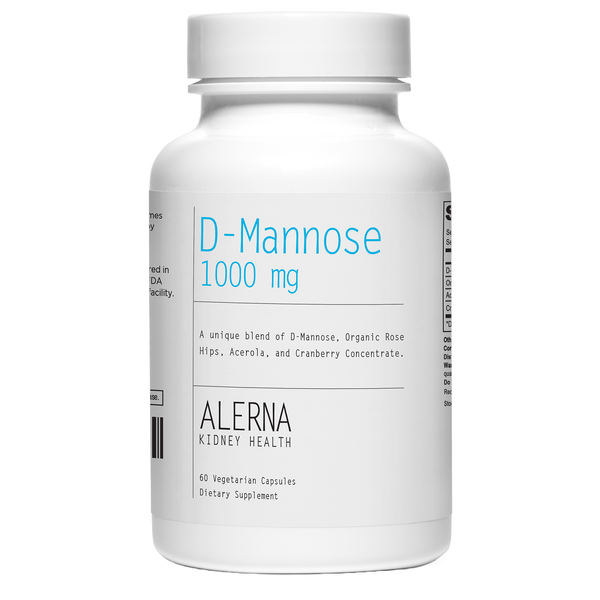
Is D-Mannose a Diuretic?
Diuretics make the kidneys release more water. D-mannose has a different reputation, and a name that causes some confusion.
Not a Known Diuretic
D-mannose isn't classified as a diuretic, and reported side effects focus on the stomach, such as bloating and loose stools, not urine output. D-mannose is a simple sugar found in small amounts in many fruits, including apples and cranberries.
Mannose does have one medical use. Doctors give it to young patients with a rare inherited condition called MPI-CDG (mannose phosphate isomerase congenital disorder of glycosylation), which can cause protein loss through the gut. Reports in the Journal of Pediatrics describe that use, and it has nothing to do with moving water out of the body.
Not the Same as Mannitol
Mannitol is a related sugar alcohol that hospitals give by IV (intravenous) infusion as a powerful diuretic. The names sound alike, but mannitol and D-mannose are different compounds with different jobs, and only mannitol is used to make the kidneys release water.
Too Little to Pull Much Water
Sugar in urine can pull water along with it, but the amount matters. Some diabetes medicines push about 70 grams of glucose into the urine each day, and urine output rises only modestly. A 1- to 2-gram dose of D-mannose is a tiny fraction of that, so any water-pulling effect is likely small.

Why Might You Urinate More on D-Mannose?
Extra fluid and bladder irritation explain most new bathroom trips better than D-mannose itself does. If bathroom trips picked up after starting D-mannose, a few common culprits deserve a look first:
Extra water: D-mannose in powder form is usually stirred into a full glass, and capsules go down with water. More fluid in means more urine out.
Hydrating on purpose: people focused on urinary health often drink more without noticing the change, and adding cranberry juice brings even more fluid.
Caffeine and alcohol: both increase urine output.
Bladder irritation: urgency and frequency are classic UTI symptoms, and frequent UTIs are why many people take D-mannose in the first place.
High blood sugar: frequent urination can be an early sign of diabetes.
Medications: prescription diuretics, often called water pills, are a common cause.

How Much Peeing Is Normal?
Normal covers a wider range than most people think, and fluid intake moves the numbers a lot. Count, volume, and color each tell part of the story.
About 6 to 7 Times a Day
Most people urinate about 6 to 7 times in 24 hours. Anywhere from 4 to 10 times can be normal, depending on how much a person drinks.
Roughly 800 to 2,000 mL of Urine
The kidneys usually make about 800 to 2,000 milliliters (mL) of urine a day for someone drinking about 2 liters of fluid.
Pale Yellow as a Hydration Clue
Pale yellow usually means good hydration. Clear urine all day may mean you're drinking more than your body needs.
KNOW YOUR NORMAL. KEEP YOUR ROUTINE SIMPLE.
Now you know what normal looks like: about 6 to 7 trips a day and pale yellow urine. Keeping that picture clear is easier when your routine is simple. Alerna's D-Mannose comes in vegetarian capsules with cranberry concentrate and vitamin C, so there's no powder to mix or measure. It's an easy way to support normal urinary tract function every day.
Shop D-Mannose CapsulesWhen Is Frequent Peeing a Concern?
Most extra bathroom trips are harmless, but a few patterns call for a doctor, not a guess. Underlying health conditions like diabetes or an infection usually show up as frequency plus another symptom.
Signs of Urinary Tract Infections
Common UTI symptoms include:
- Burning when you urinate
- A sudden, strong urge to go
- Cloudy or strong-smelling urine
- Pelvic pain
Doctors usually treat a bladder infection with antibiotics, and D-mannose isn't a treatment for an active UTI.
Many people take D-mannose hoping to prevent UTIs. Research suggests D-mannose appears to latch onto certain bacteria in lab studies, including E. coli, which is responsible for about 80% of UTIs, before they grab bladder cells. Preventing bacteria from sticking to the bladder wall is the theory, but the clinical evidence is mixed.
A 2024 prevention trial in women with recurrent urinary tract infections found repeat infections in 51% of the D-mannose group and about 56% of the placebo group. Its potential benefits for preventing urinary tract infections remain unproven..
Fever or Back Pain
Fever, chills, or pain in the back or side can signal a kidney infection, which needs prompt care. Risk factors like diabetes, pregnancy, and kidney stones make fast treatment even more important.
Unusual Thirst or Weight Loss
Paired with frequent urination, these are worth checking for diabetes, since high blood sugar pulls extra water into the urine. If you already have diabetes and notice more bathroom trips, check your blood sugar control with a healthcare provider.

What Supports Urinary Tract Health?
Good habits support urinary tract health more than supplements or other natural products, and the simplest ones cost nothing.
Steady Water through the Day
Sip water through the day instead of chugging it all at once. In a 2018 trial, women who normally drank little water added about 1.5 liters a day and had fewer bladder infections.
Bathroom Breaks without Delay
Go when you feel the urge instead of holding it. Long stretches of holding it may give bacteria more time to multiply.
Less Caffeine for a Sensitive Bladder
Coffee, tea, and energy drinks can irritate the bladder. This effect can be more noticeable for certain individuals.
THREE DAYS OF NOTES. ONE CLEARER ROUTINE.
Here's your next step: write down every drink and every bathroom trip for three days. Bring the diary to your doctor if the numbers look high or anything burns or hurts. Then build a routine you understand. Alerna's D-Mannose with cranberry concentrate and vitamin C comes in easy vegetarian capsules to support normal urinary tract function. Ask your doctor first, then start today.
Build My RoutineHave You Tried a Bladder Diary?
D-mannose isn't a known diuretic, and extra bathroom trips usually trace back to water, caffeine, or symptoms worth checking. For three days, write down every drink and every bathroom trip. Bring the diary to your doctor or another healthcare professional if the numbers still look high, if anything burns or hurts, or if you deal with recurrent UTIs.
If D-mannose is part of your routine, Alerna Kidney Health's D-Mannose pairs it with cranberry concentrate and vitamin C to support normal urinary tract function.* In capsule form, there's no powder to stir into a full glass, which makes your water intake easier to track. A few days of notes can show what's really behind your bathroom trips.
These statements have not been evaluated by the Food and Drug Administration. This product is not intended to diagnose, treat, cure, or prevent any disease.
Frequently Asked Questions
Does D-mannose make you pee more at night?
D-mannose itself isn't known to increase nighttime urination, but an evening dose taken with a full glass of water adds fluid before bed, so taking it earlier in the day may help.
What are the side effects of D-mannose?
The most common side effects are bloating and loose stools, and a 2022 research review found side effects were generally mild and infrequent, though limited studies have looked at long-term use.
How much water should you drink with D-mannose?
Follow the label for your dose, and for context, the National Academies suggest about 2.7 liters of total water a day for women and 3.7 liters for men from all foods and drinks.
Is it normal to pee every hour?
It can be after a lot of fluid, but see a doctor if it happens with burning, urgency, fever, or unusual thirst.
Is D-mannose bad for your kidneys?
Typical dosage hasn't been linked to kidney harm in research, though studies are limited and some health sites warn about high doses, so people with kidney disease or other risks should ask a healthcare provider first.
Medical Disclaimer:
The information provided in this article is for educational and informational purposes only and should not be considered a substitute for professional medical advice, diagnosis, or treatment. Please consult with your healthcare provider before starting any new dietary supplement, especially if you are pregnant, nursing, have a medical condition, or are taking other medications. Never disregard professional medical advice or delay in seeking it because of something you have read in this article.
References
de Lonlay, P., Cuer, M., Vuillaumier-Barrot, S., Beaune, G., Castelnau, P., Kretz, M., Durand, G., Saudubray, J.-M., & Seta, N. (1999). Hyperinsulinemic hypoglycemia as a presenting sign in phosphomannose isomerase deficiency: A new manifestation of carbohydrate-deficient glycoprotein syndrome treatable with mannose. The Journal of Pediatrics, 135(3), 379–383. https://doi.org/10.1016/S0022-3476(99)70139-3
Hayward, G., Mort, S., Hay, A. D., Moore, M., Thomas, N. P. B., Cook, J., Robinson, J., Williams, N., Maeder, N., Edeson, R., Franssen, M., Grabey, J., Glogowska, M., Yang, Y., Allen, J., & Butler, C. C. (2024). D-mannose for prevention of recurrent urinary tract infection among women: A randomized clinical trial. JAMA Internal Medicine, 184(6), 619–628. https://doi.org/10.1001/jamainternmed.2024.0264
Luo, C., Peng, D., Li, Y., Liu, S., Wu, Q., Xu, X., & Wen, J. (2024). Mannose phosphate isomerase-congenital disorder of glycosylation leads to asymptomatic hypoglycemia. Molecular Genetics and Metabolism Reports, 41, Article 101162. https://doi.org/10.1016/j.ymgmr.2024.101162
Nissenson, A. R., Weston, R. E., & Kleeman, C. R. (1979). Mannitol. The Western Journal of Medicine, 131(4), 277–284. https://pmc.ncbi.nlm.nih.gov/articles/PMC1271822/


