


Table of Contents
QUICK ANSWER
Most healthy adults can take a uric acid supplement with a multivitamin. The main risk is doubling up on shared nutrients, especially vitamins C, E, and B6, plus niacin. Add up the totals on both labels and keep them under the adult upper limits. Check with your doctor first if you take medications, have kidney disease, or manage gout.
Most people take a multivitamin without a second thought. Add a uric acid supplement, and the numbers on both labels start to matter.
For most healthy adults, the two can share a daily routine. The real risk is doubling up on shared nutrients like vitamin C, vitamin E, and B vitamins, since a few cause problems at high doses. At Alerna Kidney Health, we think a smart routine starts with knowing what's inside every bottle. Once you know which nutrients overlap and which ones affect uric acid levels, two bottles can become one routine your doctor can approve.
TWO BOTTLES, ONE SMART DAILY ROUTINE
Wondering if your multivitamin and a uric acid supplement can work together? For most healthy adults, they can, once you know what's in each bottle. Alerna's Uric Acid Support blends tart cherry, celery extract, turmeric, and quercetin with vitamins C and E. It's built for a proactive daily wellness routine that supports healthy uric acid levels over the long term.
See What's Inside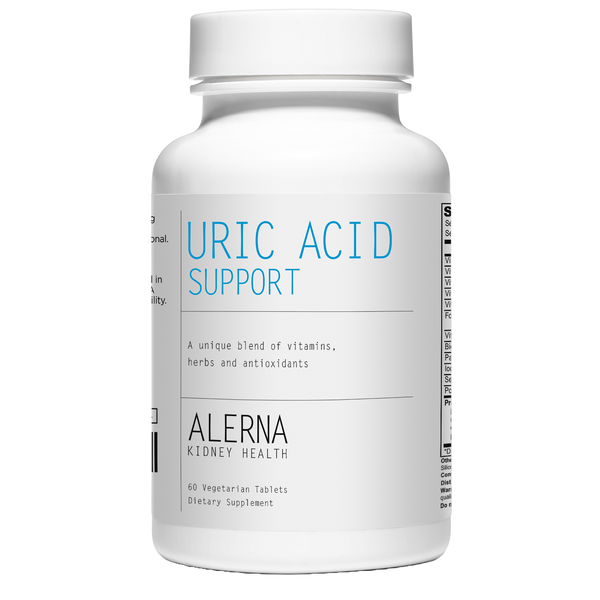
What Is Uric Acid?
Uric acid is a natural waste product the body makes when it breaks down purines. Where it comes from, and how it leaves the body, explain why levels can climb and why that matters for joint health.
A Natural Waste Product from Purines
Purines come from two places: the body's own cells and the food you eat. Foods high in purines include red meat, organ meats, some seafood, and beer. Drinks sweetened with fructose matter too, since the body speeds up uric acid synthesis as it breaks fructose down.
Mostly Cleared by the Kidneys
The kidneys remove about two-thirds of uric acid through urine, and the gut handles the rest. When the kidneys can't keep up, or the body makes more than usual, uric acid builds up in the blood. That's one reason kidney health and gout so often come up in the same conversation.
High Uric Acid Levels and Uric Acid Crystals
When high uric acid levels last for months or years, uric acid can form sharp, needle-like crystals in the joints and kidneys. This tends to happen once levels pass about 6.8 milligrams per deciliter (mg/dL). The higher the level stays, the greater the risk of developing gout.
Gout is a type of inflammatory arthritis. The immune system reacts to the crystals with inflammation, which can set off gout attacks with sudden joint pain and swollen joints, often in the big toe. Without treatment, gout flares tend to return, and recurrent episodes can grow in severity.
Often No Symptoms until a Flare
Many people with high uric acid levels have no symptoms at all, so the health problem stays hidden until a flare. Only a blood test shows the number, and only a doctor can make a diagnosis. The immune system's role in flares is also why gout is sometimes mistaken for an autoimmune condition.

What's in Uric Acid Dietary Supplements?
Most uric acid dietary supplements pair plant extracts with familiar vitamins. They're usually sold as capsules or tablets, and some come in powder form. The ingredients that show up most often include:
Tart cherry: a sour cherry rich in anthocyanins, a type of plant antioxidant. Labels may list it as tart cherry extract or cherry extract, and some people prefer tart cherry juice.
Celery seed extract: a long-used herbal ingredient made from the seeds of the celery plant.
Turmeric: a golden root spice. Its main compound, curcumin, has been studied for anti-inflammatory properties.
Quercetin: a flavonoid found in apples, onions, and berries.
Vitamins C and E: antioxidant vitamins that most multivitamins also contain.
B vitamins: another common overlap, often including folic acid.
Other Remedies with Early Research
Some people add other remedies for joint health on top of these, such as omega-3 fatty acids, evening primrose oil, borage oil, black currant seed oil, or devil's claw, an herb used in traditional medicine in southern Africa. Each one adds another label to track.
Research on the effectiveness of many of these herbs is still early. Small studies with positive results don't always hold up in a larger placebo-controlled trial. Dietary supplements also don't need Food and Drug Administration (FDA) approval before they're sold, so doses and quality vary from brand to brand.
FOUR KEY INGREDIENTS. ONE DAILY FORMULA.
Now you know the ingredients most uric acid supplements rely on. Buying them one by one means more bottles, more labels, and more math. Uric Acid Support brings tart cherry, celery extract, turmeric, and quercetin together with vitamins C and E. Take one tablet in the morning and one at night with a meal. It's a simple way to support healthy uric acid levels and everyday mobility.
Simplify My RoutineHow Safe Is a Uric Acid Supplement with a Multivitamin?
For most healthy adults, a uric acid supplement and a multivitamin can share a spot in the daily routine. The fine print on each label decides how smoothly that goes. Shared vitamins, nutrients tied to uric acid levels, and prescription medications are the places to look.
Generally Fine for Healthy Adults
There's no widely reported conflict between a standard multivitamin and the botanical blends found in most uric acid supplements. Still, age, kidney function, and other prescriptions can change the picture. What's generally safe for one person may not fit another.
Overlapping Vitamins and Minerals
Doubling up is the most common issue. Alerna's Uric Acid Support, for example, contains vitamins C and E plus B vitamins, and most multivitamins do too. Every nutrient has a Tolerable Upper Intake Level (UL), the most an adult can take each day without likely harm. The National Institutes of Health (NIH) lists these limits:
| Nutrient | Adult Upper Limit (UL) |
|---|---|
| Vitamin C | 2,000 milligrams (mg) |
| Vitamin E | 1,000 mg (from supplements) |
| Vitamin B6 | 100 mg |
| Folic acid | 1,000 micrograms (mcg) |
| Niacin (vitamin B3) | 35 mg (from supplements) |
| Selenium | 400 mcg |
Vitamin B6 is the one to watch. It shows up in multivitamins, B-complex pills, magnesium blends, and energy drinks. Too much over time can damage nerves and cause numbness or tingling in the hands and feet.
Nutrients That May Affect Uric Acid Levels
High-dose niacin can raise uric acid levels because it slows how much uric acid the kidneys remove. Standard multivitamins often contain about 15 to 25 mg of niacin, far below the doses linked to higher uric acid. The bigger concern is high-dose niacin, often 500 mg or more, which some people take for cholesterol.
Vitamin C has a more mixed record. A 2011 review of short studies found a small drop in uric acid with vitamin C supplements. A 2013 controlled trial in gout patients, though, saw no meaningful change at 500 mg a day. The evidence doesn't support adding extra vitamin C to a routine that already includes plenty.
Extra Care with Certain Medications
Some ingredients can interact with prescription drugs. Turmeric, devil's claw, and high doses of omega-3 fatty acids may raise bleeding risk for people on blood thinners, and quercetin can change how the body handles certain medications.
Gout patients on a treatment regimen need extra caution. Drugs for lowering uric acid levels, such as allopurinol and febuxostat, block xanthine oxidase, an enzyme the body needs for uric acid synthesis. Colchicine and other anti-inflammatory medications help decrease inflammation and reduce pain during flare-ups.
No FDA-Approved Supplement for Gout
No dietary supplement is FDA-approved to treat gout or reduce uric acid, so talk to your doctor about the risks and benefits before mixing herbs with prescriptions, especially if you have kidney disease or are pregnant. Alerna's own label gives similar advice.

How Should You Combine the Two Supplements?
The safest way to combine a uric acid supplement and a multivitamin is to treat both labels as one daily total. A few simple habits keep a two-bottle routine on track:
Read both labels side by side. Use the Supplement Facts panel on the back, not the claims on the front.
Add up shared nutrients. Compare each combined total with the upper limits in the table.
Check the niacin dose. Most multivitamins are low, but high-potency formulas vary.
Take both with food. Alerna suggests one Uric Acid Support tablet in the morning and one at night with a meal and water.
Stick to the serving size. Skip the urge to double up after a missed dose.
Watch for possible side effects. An upset stomach, a rash, or any other adverse event is a reason to stop and call your doctor. You can also report it to the FDA.
Keep up the basics. Lifestyle changes like eating less red meat, limiting alcohol, and drinking enough water often matter more for healthy uric acid levels than any supplement.
Bring both bottles to your next checkup. A quick assessment with your doctor or pharmacist can catch overlaps you missed.
FIVE MINUTES TO A SMARTER DAILY ROUTINE
You know what to watch: vitamin B6, niacin, and your combined vitamins C and E. Now take the next step. Compare your multivitamin with the Uric Acid Support label, check with your doctor if you take medications, and start a routine you fully understand. Two tablets a day to support healthy uric acid levels and everyday mobility. Your routine starts today.
Start My Routine TodayHave You Checked Both Labels Yet?
Taking a uric acid supplement with a multivitamin is generally safe for most healthy adults, as long as the shared nutrients stay under the upper limits. Watch vitamin B6, niacin, and the combined vitamin C and E. Let your doctor weigh in if you take medications or manage gout.
If you want a botanical option, Uric Acid Support from Alerna Kidney Health blends tart cherry, celery extract, turmeric, and quercetin with vitamins C and E for antioxidant support and everyday mobility support. Because it contains vitamins, check it against your multivitamin before you start. Pull both bottles out today. Five minutes with the labels is all it takes to spot a double dose.
These statements have not been evaluated by the Food and Drug Administration. This product is not intended to diagnose, treat, cure, or prevent any disease.
Frequently Asked Questions
What vitamins should you avoid with high uric acid?
High-dose niacin is the best-known vitamin to limit, since large amounts can raise uric acid levels, so check with your doctor before starting any high-dose vitamin.
Can you take turmeric with a multivitamin?
Most healthy adults can take the two together, but turmeric may interact with blood thinners and diabetes medications, so ask your doctor first if you take either.
When is the best time to take a uric acid supplement?
Follow the label, which for Alerna's Uric Acid Support means one tablet in the morning and one at night with a meal and water.
Can you take a uric acid supplement every day?
Many uric acid supplements are made for daily use, but individual experiences vary, so follow the label and check in with your doctor about long-term use.
Does drinking water help with uric acid?
The kidneys clear most uric acid through urine, and drinking enough water supports normal kidney function as part of a healthy diet.
Medical Disclaimer:
The information provided in this article is for educational and informational purposes only and should not be considered a substitute for professional medical advice, diagnosis, or treatment. Please consult with your healthcare provider before starting any new dietary supplement, especially if you are pregnant, nursing, have a medical condition, or are taking other medications. Never disregard professional medical advice or delay in seeking it because of something you have read in this article.
References
Grahame, R., & Robinson, B. V. (1981). Devil's claw (Harpagophytum procumbens): Pharmacological and clinical studies. Annals of the Rheumatic Diseases, 40(6), 632. https://doi.org/10.1136/ard.40.6.632
Juraschek, S. P., Miller, E. R., III, & Gelber, A. C. (2011). Effect of oral vitamin C supplementation on serum uric acid: A meta-analysis of randomized controlled trials. Arthritis Care & Research, 63(9), 1295–1306. https://doi.org/10.1002/acr.20519
National Institutes of Health, Office of Dietary Supplements. (n.d.). Nutrient recommendations and databases. https://ods.od.nih.gov/HealthInformation/nutrientrecommendations.aspx
Stamp, L. K., O'Donnell, J. L., Frampton, C., Drake, J. M., Zhang, M., & Chapman, P. T. (2013). Clinically insignificant effect of supplemental vitamin C on serum urate in patients with gout: A pilot randomized controlled trial. Arthritis & Rheumatism, 65(6), 1636–1642. https://doi.org/10.1002/art.37925
U.S. Food and Drug Administration. (2022, October 21). Information for consumers on using dietary supplements. https://www.fda.gov/food/dietary-supplements/information-consumers-using-dietary-supplements


