


Table of Contents
Millions of people take a daily multivitamin for added nutritional support, assuming it can only help the body stay strong and resilient. For those focused on vitamins for kidney health, however, that assumption is not always correct. Many standard multivitamins contain hidden ingredients, excess minerals, or high doses that quietly increase the workload placed on the kidneys.
For individuals managing kidney health concerns, generic formulas may create unnecessary strain rather than support balance. This article explains which overlooked ingredients in common multivitamins may stress kidney function and how to choose supplements that support natural filtration without adding risk. Kidney-specific brands, such as Alerna Kidney Health, are often formulated to avoid these pitfalls. Kidney-specific brands, such as Alerna Kidney Health, are often formulated to avoid these pitfalls.
READY FOR A MORE MINDFUL DAILY ROUTINE?
Ingredient choices matter. Add Alerna D-Mannose to a simple, proactive daily wellness routine.
Explore D-Mannose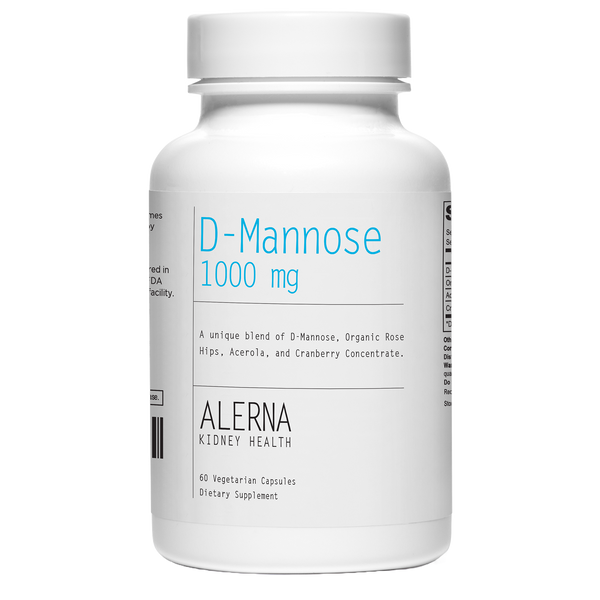
Which Minerals Pose Hidden Risks?
Minerals that pose hidden risks are those commonly added to standard multivitamins, such as phosphorus, potassium, and certain forms of calcium, because they require additional filtration by the kidneys. When kidney function is already under strain, these minerals can accumulate or disrupt balance, making some multivitamin formulas less suitable for long-term kidney support.
Phosphorus Additives and Preservatives
Phosphorus is a concern because it is not always clearly listed as a nutrient on supplement labels. Many manufacturers use phosphorus-based preservatives, flavor stabilizers, or fillers that quietly increase total phosphorus intake.
For kidney patients and those with chronic kidney disease (CKD), excess phosphorus can disrupt parathyroid hormone (PTH) balance and contribute to soft-tissue calcification. Over time, this imbalance may affect bones, blood pressure regulation, and overall cardiovascular function.
Potassium in Broad-Spectrum Blends
Potassium is commonly added to broad-spectrum multivitamins to meet daily values for the general public. While potassium supports nerve and muscle activity, not everyone benefits from higher intake.
For individuals with CKD, maintaining electrolyte balance is key. A healthcare provider may recommend limiting potassium based on lab results to help support heart rhythm and kidney function.
Calcium Accumulation and Vascular Impact
Calcium is essential for keeping bones strong, but generic forms in inexpensive supplements are not always absorbed efficiently. When absorption is poor, calcium may circulate rather than being directed to skeletal tissue.
In people with kidney disease, excess calcium intake may contribute to calcium deposition in soft tissues rather than supporting bone health. Choosing forms that support enough calcium without unnecessary buildup is especially important.

Do Synthetic Fillers Stress the Kidneys?
Synthetic fillers can add stress because they introduce nonessential compounds that the body should process and filter. Reducing exposure to these additives helps the kidneys focus on handling essential nutrients rather than unnecessary substances.
Artificial Dyes and Coloring Agents
Synthetic food dyes such as Red 40 or Yellow 5 are commonly used to make pills visually appealing. These dyes offer no nutritional value and add to the body's burden of processing nonessential compounds.
For individuals prioritizing kidney health, minimizing the use of artificial dyes may help reduce cumulative filtration stress. Cleaner formulations align better with a healthy diet and long-term wellness goals.
Titanium Dioxide and Chemical Glazes
Titanium dioxide and shellac coatings are often used to whiten tablets or create a glossy finish. These agents serve no biological purpose and do not support nutrient absorption. They are added for appearance and shelf appeal rather than health benefits, increasing the number of inactive substances the body must process.
Avoiding chemical glazes may help reduce unnecessary exposure to compounds the kidneys must eventually filter out. Many vitamin supplements approved for renal-focused use avoid these additives entirely, favoring simpler formulations designed to reduce overall filtration burden and support gentler daily supplementation.
Magnesium Stearate and Binders
Magnesium stearate is a common flow agent that prevents ingredients from sticking during manufacturing. While generally regarded as safe, excessive use may add processing demand during digestion and filtration.
Choosing supplements with minimal binders can support smoother absorption and reduce background stress on kidney function.
KEEP YOUR WELLNESS ROUTINE SIMPLE
Looking beyond complicated supplement blends? Make Alerna D-Mannose part of your everyday wellness habits.
See D-MannoseCan High Vitamin Doses Be Toxic?
Vitamins are essential nutrients, but excessive doses can overwhelm the body’s ability to maintain balance. Very high-dose supplements may increase metabolic workload, especially when excretion pathways are limited.
Vitamin C Conversion to Oxalates
Vitamin C supports the immune system and tissue repair, but too much can be problematic. High-dose vitamin C supplements may be converted into oxalate, a compound that can increase the risk of kidney stone formation in susceptible individuals.
For those with kidney concerns, small doses from foods or carefully formulated supplements are often preferred for meeting nutritional needs.
Fat-Soluble Vitamin A Retention
Vitamin A exists in two main forms: beta-carotene and preformed retinol. Beta-carotene converts to vitamin A as needed, while retinol accumulates in the body.
Because fat-soluble vitamins like vitamin A are not easily excreted, excessive intake may accumulate over time and place additional stress on internal organs, including the kidneys.

How Do You Choose Vitamins for Kidney Health?
Choosing safer supplements starts with looking beyond front-label marketing and carefully reviewing ingredient lists. Kidney-friendly products prioritize bioavailability, balance, and avoidance of unnecessary excess.
The goal is to support nutrients that help the body function properly without increasing renal workload.
Water-Soluble B-Complex Priority
Water-soluble vitamins, especially B vitamins, are generally easier for the kidneys to manage. Excess amounts are typically excreted in urine rather than stored in tissues.
A B complex may support red blood cell formation, energy metabolism, and nerve function while posing less accumulation risk. Nutrients such as folic acid, biotin, niacin, and pantothenic acid play roles in metabolism and blood cell formation.
Third-Party Testing Verification
Reliable supplements should undergo independent testing for purity and contaminants. Third-party verification helps ensure products are free from heavy metals and harmful additives.
Brands that disclose their testing and ingredient sourcing may provide more confidence for individuals managing kidney health.
Key Nutrients Often Misunderstood in Multivitamins
Some nutrients are essential but require careful balance for kidney health. Understanding their role helps prevent unintentional overuse.
The table below summarizes commonly misunderstood ingredients.
| Nutrient | Role in the Body | Kidney Consideration |
|---|---|---|
| Vitamin D | Supports calcium balance and bone health | Excess may raise calcium and influence PTH levels |
| Iron | Supports oxygen transport in the blood | Iron supplements may be unnecessary without a confirmed deficiency through blood testing |
| Phosphorus | Supports energy production and bone structure | Hidden sources may increase kidney workload |
| Vitamin C | Immune and tissue support | High doses linked to kidney stone risk in some individuals |
READY TO MAKE D-MANNOSE PART OF YOUR ROUTINE?
Take a proactive approach to daily wellness with Alerna D-Mannose and consistent, mindful habits.
Start Your RoutinePrioritizing Renal-Safe Supplementation
Vitamins and minerals are essential for staying healthy, but formulation matters greatly for kidney health. Generic multivitamins may include excess minerals, fillers, or dosing levels that increase filtration demands over time.
Choosing kidney-friendly supplements that avoid excess minerals, fillers, and high doses may help reduce kidney strain over time. This is the standard Alerna Kidney Health formulates to: clean, targeted products in vegetarian capsules, without the artificial dyes, chemical glazes, and unnecessary fillers this article flags. Whatever you choose, read the label closely, favor third-party-tested products, and check with your doctor before adding anything new, especially if you have reduced kidney function.
Frequently Asked Questions
What vitamins are hard on the kidneys?
Fat-soluble vitamins and very high doses of certain minerals or vitamin C can be harder on the kidneys when intake exceeds the body’s needs.
Is Vitamin C bad for your kidneys?
Normal amounts of vitamin C are safe for most people. However, very high supplemental doses may increase the chance of kidney stones, especially in those who are more sensitive.
Can multivitamins increase creatinine levels?
Some supplements may influence lab readings in certain individuals, which is why routine blood testing is often recommended when managing kidney health.
Do kidneys filter out excess vitamins?
The kidneys filter excess water-soluble vitamins, while fat-soluble vitamins are stored more easily in the body.
Is magnesium safe for kidney health?
Magnesium is generally safe in appropriate amounts, but intake should be adjusted based on kidney function and medical advice
Medical Disclaimer:
The information provided in this article is for educational and informational purposes only and should not be considered a substitute for professional medical advice, diagnosis, or treatment. Please consult with your healthcare provider before starting any new dietary supplement, especially if you are pregnant, nursing, have a medical condition, or are taking other medications. Never disregard professional medical advice or delay in seeking it because of something you have read in this article.
References
Drüeke, T. B. (2013). Modulation and action of parathyroid hormone in chronic kidney disease. Kidney International, 84(5), 962–969. https://pmc.ncbi.nlm.nih.gov/articles/PMC3884106/
Fontana, F., Cazzato, S., Giovanella, S., Ballestri, M., Leonelli, M., Mori, G., & Cappelli, G. (2020). Oxalate nephropathy following excessive vitamin C administration. Kidney International Reports, 5(11), 1815–1822. https://pmc.ncbi.nlm.nih.gov/articles/PMC7363608/
Hathcock, J. N., Hattan, D. G., Jenkins, M. Y., McDonald, J. T., Sundaresan, P. R., & Wilkening, V. L. (2017). Vitamin A toxicity: A review of evaluation methods. Toxicology Reviews, 4, 554–568. https://ui.adsabs.harvard.edu/abs/2017ToxR....4..554H/abstract
National Research Council. (1989). Diet and health: Implications for reducing chronic disease risk. National Academies Press. https://www.ncbi.nlm.nih.gov/books/NBK218756/
Ross, A. C., Taylor, C. L., Yaktine, A. L., & Del Valle, H. B. (Eds.). (2011). Dietary reference intakes for calcium and vitamin D. National Academies Press. https://www.ncbi.nlm.nih.gov/books/NBK278975/
Ticinesi, A., Nouvenne, A., Lauretani, F., Curci, C., Maggio, M., Borghi, L., & Meschi, T. (2018). Vitamin C intake and kidney stone risk: A systematic review and meta-analysis. Urolithiasis, 46(5), 479–487. https://pmc.ncbi.nlm.nih.gov/articles/PMC5757582/


